- Stablecoin yield is not one category, it comes from five sources: incentives, fees and spreads, credit and intermediation, basis and carry, and insurance premiums.
- Premium-backed yield is funded by end demand from policyholders paying for protection, not by protocol growth spend, emissions, or cyclical onchain fees.
- Insurance demand is sticky across cycles. Coverage is a non-optional operating need so premium revenue can persist even when crypto market activity contracts.
- Re is building the infrastructure layer that connects onchain capital to the global reinsurance market and enables premium-backed cash flows in DeFi.
- What allocators should watch: claims experience, underwriting discipline, counterparty quality, risk limits and concentration, and transparency into exposures and performance.

Crypto markets have produced many forms of yield over the past decade, yet the industry is only beginning to distinguish between returns driven by market activity and those supported by economic demand. Stablecoin yield is treated as one category, yet it spans distinct types with different funding sources. As allocators become more selective, the core question remains: where does yield come from and what makes it last?
Re is building onchain reinsurance infrastructure that connects stablecoin capital to premium- backed revenue from the global reinsurance market. Instead of relying on incentives or cyclical onchain fees, this model introduces premium funded cash flows into DeFi. Premium-backed yield is a distinct source of stablecoin returns because it is funded by payments for risk transfer, placing it outside the traditional fee and incentive driven yield stack.
Why This Matters
Stablecoin yield is often discussed as a single category, but its underlying sources vary and behave differently across market cycles. It generally emerges from five primary sources: incentive programs designed to attract liquidity, fees and spreads generated by trading or lending activity, credit and intermediation income, basis or carry trades that capture market inefficiencies, and insurance premiums paid for risk transfer.
Insurance premiums operate under a different logic because they are paid to transfer risk rather than to chase returns. Premium revenue tends to persist because protection remains necessary regardless of sentiment, and it is reinforced through renewals and ongoing coverage needs.
Re’s infrastructure positions onchain capital to access underwriting economics by bridging DeFi liquidity with the approximately $700 billion global reinsurance market, all while maintaining transparency and programmability native to blockchain systems.
A Simple Taxonomy of Yield
Understanding premium-backed yield starts with clarifying the main categories of stablecoin returns that exist in crypto today. Incentive-driven yield is generated through token emissions that reward participation and adoption, but this yield is often temporary.
Market activity yield is generated from onchain fees such as trading, or lending spreads which can be productive but typically expands during periods of market enthusiasm and contracts when participation falls. Leverage amplified yield is created through structured strategies that increase exposure through borrowing, which can introduce fragility in stressed markets.
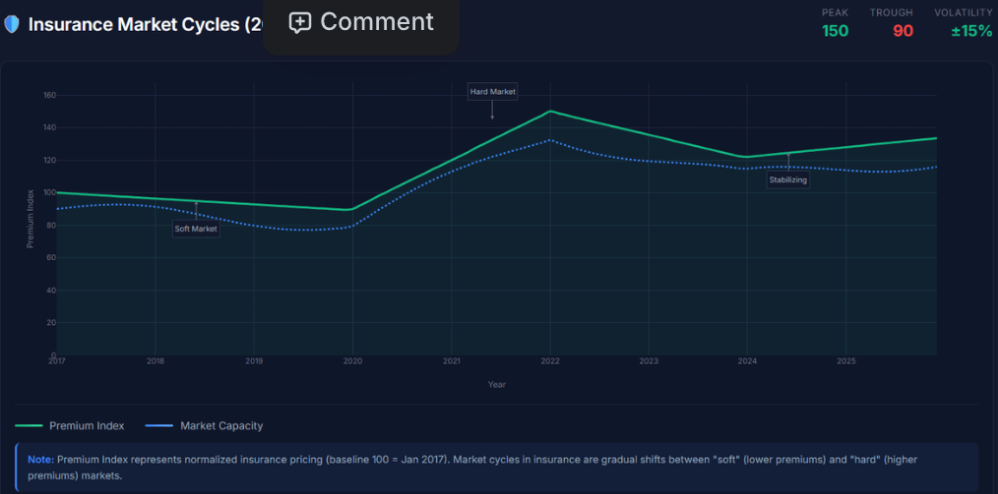
Premium-backed yield differs because it is funded by premiums paid for insurance coverage, which reflects real economic demand for protection. Through Re’s onchain reinsurance infrastructure, stablecoin yield can be linked to underwriting income that historically existed offchain. In this context, onchain reinsurance introduces premium revenue as a new recurring yield primitive, expanding economic activities capable of generating stablecoin returns.
What Premium-Backed Yield Actually Is
Insurance functions through an exchange where policyholders pay premiums to transfer defined risks to underwriting capital. Those premiums compensate capital providers for absorbing uncertainty and funding claims when losses occur. In practice, these premiums are paid by insurers and insurance carriers seeking to transfer portions of their risk exposure to reinsurance markets, creating consistent demand for underwriting capacity.
Unlike incentive-driven yield, premium revenue originates from end demand, as policyholders and insurers pay for protection as an operating necessity rather than to attract capital.
In the model that onchain reinsurance enables, stablecoin capital gains exposure to underwriting economics by connecting blockchain liquidity to the reinsurance market. Re is positioned as an infrastructure layer that helps make this connection possible by enabling premium-backed revenue to be expressed in an onchain context. In this framework, yield is a product of premium payments that exist because businesses and insurers continuously seek risk transfer, independent of whether crypto markets are expanding or contracting.
Why Premium Demand Is Sticky
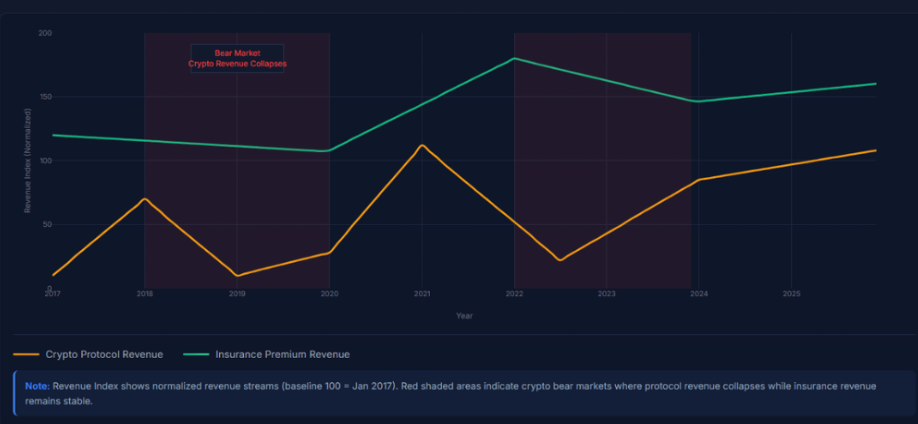
Premium demand remains durable because insurance is a necessity. Businesses maintain coverage to operate, manage liability exposure, and meet regulatory requirements. Property risks, catastrophe exposure, and operational uncertainties persist through expansions and downturns, so premiums continue to be paid even when speculative activity declines.
Reinsurance markets reinforce this stability through renewal cycles and long term risk relationships. Policies renew because risks remain present, and in many contexts demand can increase after stress events.This dynamic differs from many crypto native revenue streams that depend on participation and sentiment. By connecting onchain capital to these insurance market mechanics, Re’s infrastructure supports the thesis that premium-backed yield can be structurally more persistent than fee driven or incentive driven yield across market cycles.
What This Means for Allocators
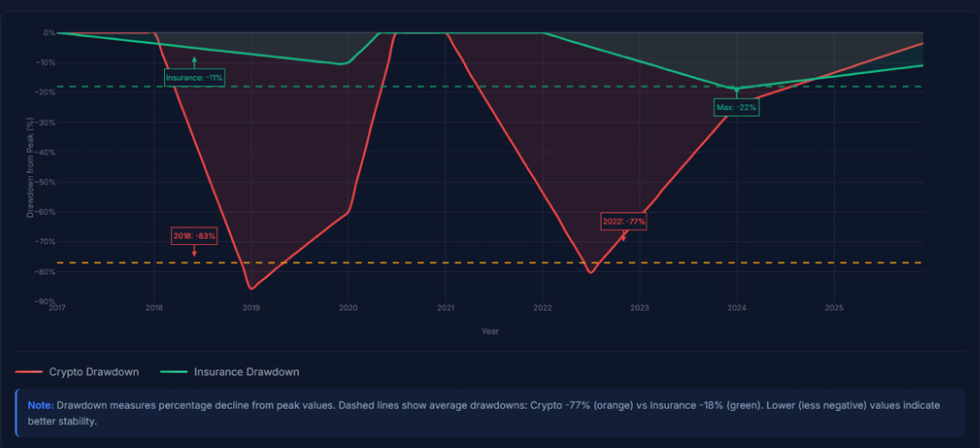
For allocators, premium-backed yield expands the stablecoin return landscape beyond the familiar set of DeFi mechanisms. Many crypto native strategies remain indirectly tied to asset price direction because their revenue depends on liquidity conditions and onchain participation. Even diversified DeFi portfolios can converge toward higher correlation during downturns when activity compresses across protocols at the same time.
Premium-backed yield offers a different profile because its revenue drivers originate in insurance markets where demand is anchored in risk transfer needs rather than speculation. This can introduce lower correlation to crypto market direction because premium flows are not fundamentally a function of trading volume or token prices.
For allocators evaluating sustainable yield, onchain reinsurance exposure can function as a portfolio sleeve that complements more cyclical DeFi strategies. Re’s role in this context is to build infrastructure that makes underwriting economics accessible onchain in a way that supports transparency, monitoring, and long-term capital participation.
A Practical Diligence Framework
As allocators consider premium-backed yield, diligence should follow underwriting logic as much as DeFi logic. The first question is the source of yield, whether returns are funded by premium payments or by incentives and leverage. A second question is underwriting discipline, including how risks are selected, priced, and monitored over time. A third question is alignment, including who absorbs losses and whether incentives encourage risk taking rather than volume.
Transparency and reporting matter because allocators need to understand what exposures exist and how performance evolves across market environments. Risk management design also matters, including safeguards, and operational controls that support resilience in stress periods.
Re’s infrastructure is relevant here because the goal is durable access to underwriting economics that can be assessed with clear signals. In practice, allocators should closely monitor claims experience, underwriting discipline, counterparty quality, portfolio risk limits and concentration, and the level of transparency into exposures and performance reporting.
Building the Bridge Between Markets
Onchain reinsurance represents a convergence between crypto capital markets and one of the most established sectors in global finance. By enabling underwriting exposure through blockchain based infrastructure, Re connects programmable onchain capital with insurance markets built on centuries of risk pricing. This bridge can allow stablecoin yield to be supported by premium revenue that is generated from real-world demand for protection.
As digital asset markets mature, sustainable yield increasingly depends on integration with productive economic systems outside crypto itself. Premium-backed yield illustrates how stablecoin returns can expand beyond fees and incentives by introducing revenue streams tied to insurance demand.